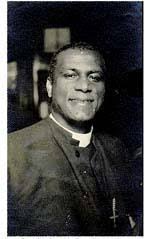
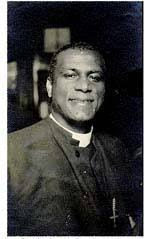
Born November 7, 1873, in St. Kitts, British West Indies, Rev. Dr. Charles Douglas Martin (1873–1942) rose to become the first and only Black minister of the Moravian Church in the United States. Founder of Beth-Tphillah, the Fourth Moravian Church in Harlem, he served for nearly 30 years while helping organize the historic 1917 Silent Protest Parade. A scholar, Pan-African advocate, and associate of Marcus Garvey, Dr. Martin left a lasting mark on Harlem’s religious, intellectual, and civil rights history.
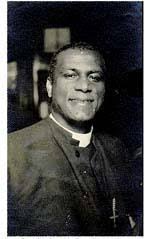
Rev. Dr. Charles Douglas Martin (known as C.D. Martin; 1873–1942) stands as one of those remarkable Caribbean figures whose influence reached far beyond the shores of his birthplace. A prominent West Indian Moravian minister and educator, he became a steady, principled voice within both the African American community and the Moravian Church during some of the most turbulent decades of the early twentieth century.
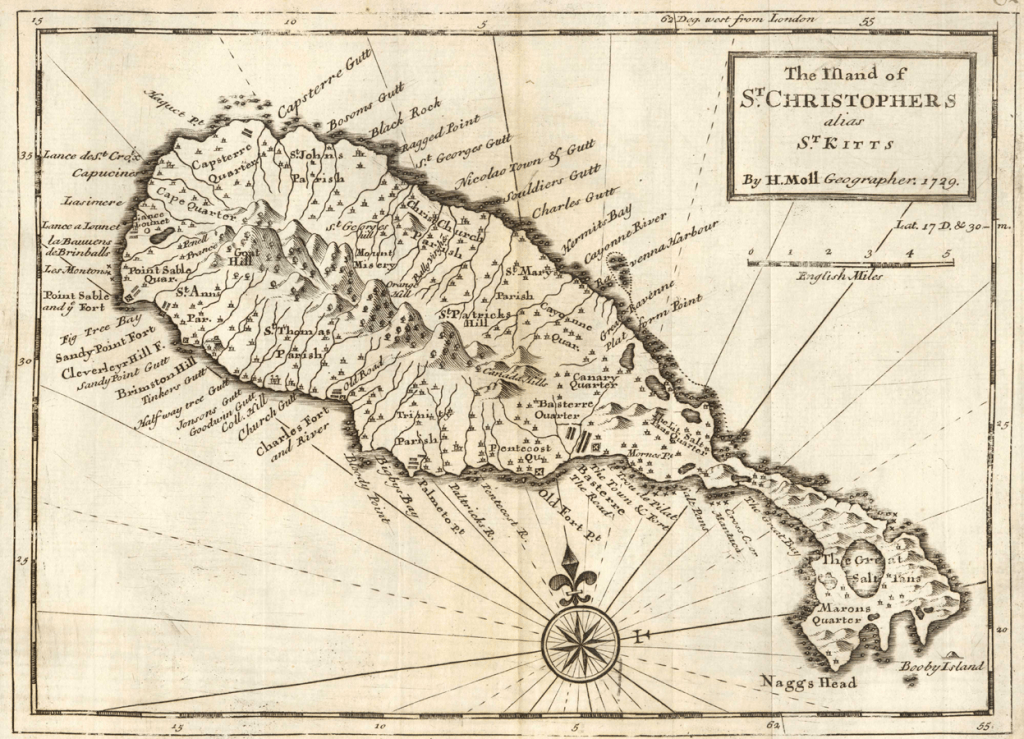
Born November 7, 1873, in St. Kitts, British West Indies, to Joseph and Adriana Martin, he was educated in the West Indies before making his way to the United States. He attended church schools in St. Kitts, later studying at Nisky College and Theological Seminary in New York. His academic pursuits did not stop there. Over time, he earned multiple advanced degrees, including a Doctor of Divinity, reflecting a lifelong commitment to scholarship and service.
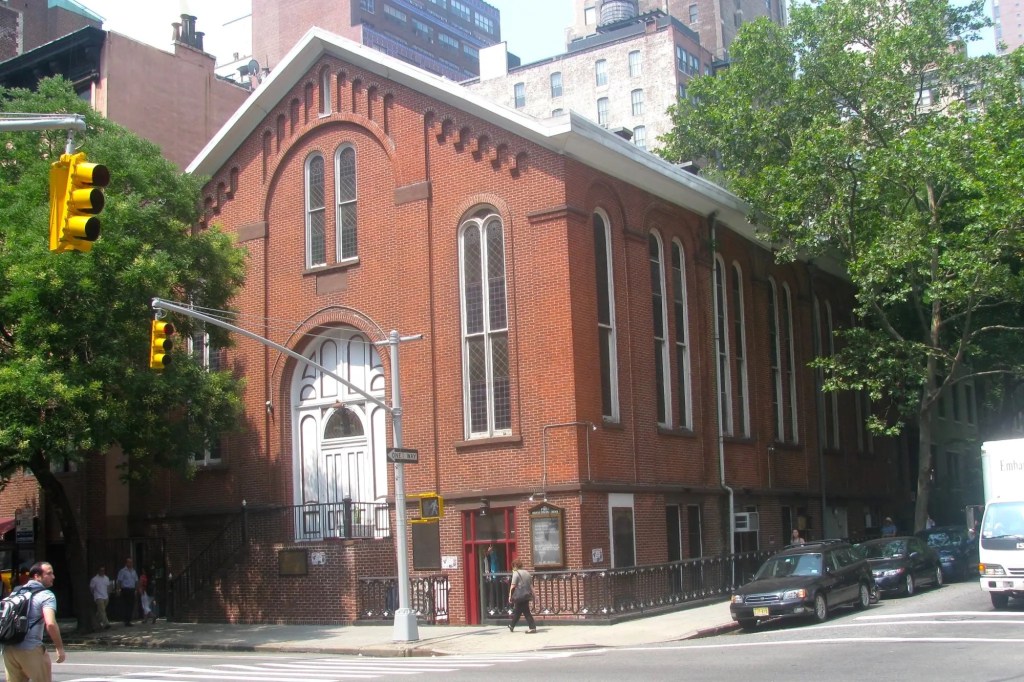
In 1903, he founded the Fourth Moravian Church in Harlem, New York. By July 1908, he was presiding over the church, which was located at 124 West 136th Street, Manhattan. He called the church “Beth-Tphillah,” Hebrew for House of Prayer. Under his leadership, Beth-Tphillah became far more than a place of worship. For nearly 30 years, it served as a spiritual anchor and social hub for West Indian immigrants navigating life in New York City.
In 1912, he was ordained as the first and only Black minister of the Moravian Church in the United States. That distinction alone marked a significant breakthrough in a denomination and a nation still deeply shaped by racial barriers. His ministry continued faithfully until his death in March 1942.
Dr. Martin’s life was not confined to the pulpit. In 1910, he married Ellen Patterson of Jamaica, British West Indies, further strengthening the Caribbean connections that defined his community. He was a member of the American Academy of Political and Social Science and served as vice-president of the Negro Society for Historical Research. His intellectual curiosity extended into the preservation of Black history itself. Over the years, he amassed a significant personal library focused on African history and the African diaspora. That collection was later acquired by the Schomburg Center for Research in Black Culture in Harlem, ensuring that his commitment to knowledge would benefit future generations.
His activism was equally profound. In 1917, during the NAACP’s historic Negro Silent Protest Parade, he worked alongside the Reverend Hutchens C. Bishop, serving as Secretary while Bishop served as President. The gathering of thousands of Negroes, marching in silent protest on a hot July day, made national news and set the model for other protests to follow. It was one of the earliest mass civil rights demonstrations in American history, a dignified yet powerful response to lynching and anti-Black violence.
A Call to Action
Dr. Martin’s own words from that moment still resonate:
“We march because we are thoroughly opposed to Jim-crow Cars, etc., Segregation, Discrimination, Disfranchisement, LYNCHING, and the host of evils that are forced on us. It is time that the Spirit of Christ should be manifested in the making and execution of laws.
…
We march because the growing consciousness and solidarity of race coupled with sorrow and discrimination have made us one: a union that may never be dissolved in spite of shallow-brained agitators, scheming pundits and political tricksters who secure a fleeting popularity and uncertain financial support by promoting the disunion of a people who ought to consider themselves as one.”
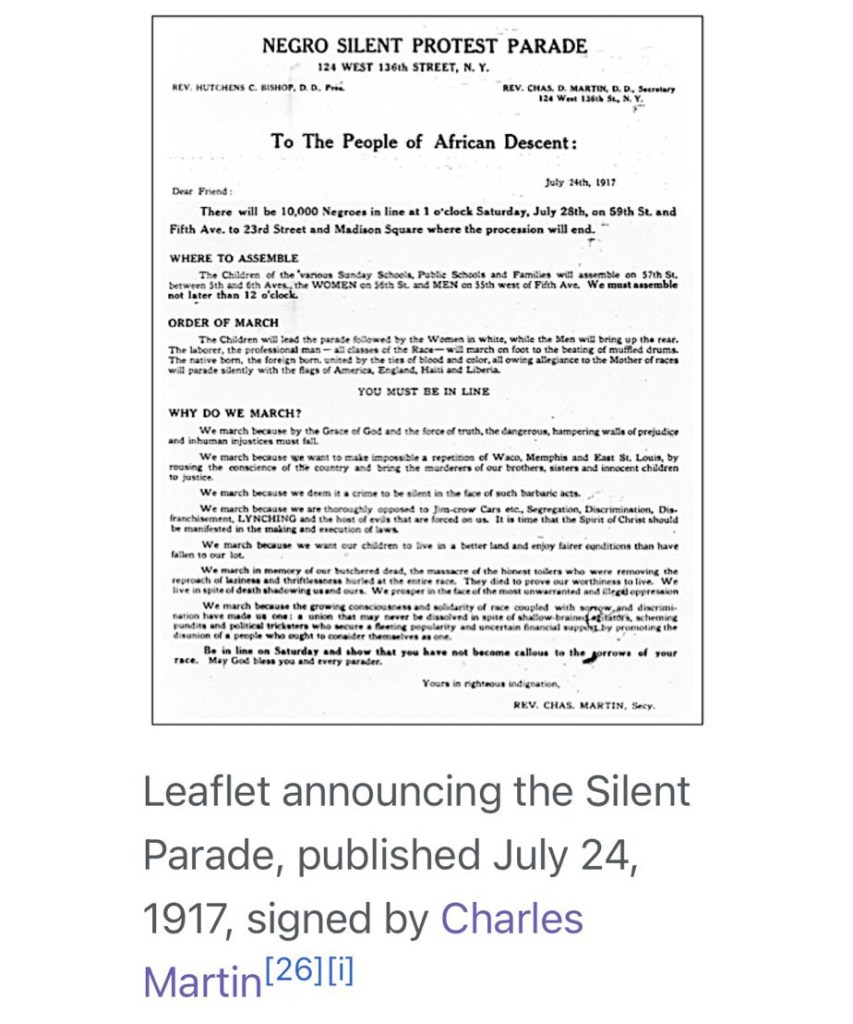
Those words reveal the heart of a pastor who saw no contradiction between faith and justice. For Dr. Martin, Christianity demanded public courage
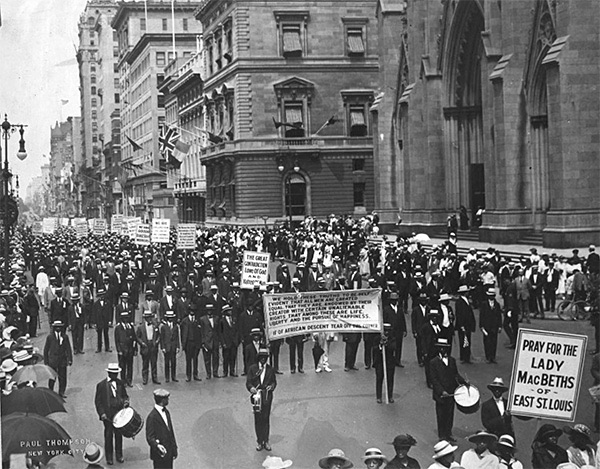
What was the Silent March of 1917?
On July 28, 1917, New York City became the site of one of the first major mass demonstrations for civil rights in the United States. The Silent Protest Parade (also known as the “Negro Silent Protest Parade”) brought between 8,000 and 15,000 African Americans down Fifth Avenue from 57th Street to 23rd Street in complete silence.
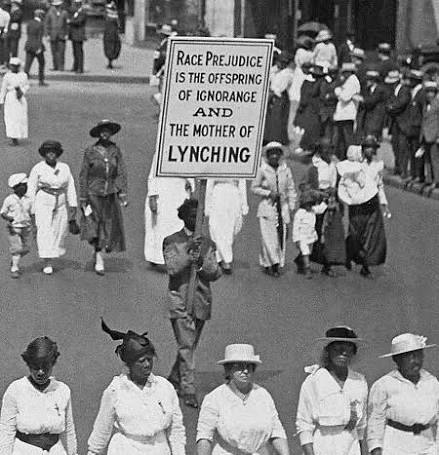
The march was organized by the NAACP, including leaders such as W.E.B. Du Bois and James Weldon Johnson, alongside clergy such as Rev. Dr. Charles Douglas Martin and community leaders. It was a direct response to the East St. Louis riots (May–July 1917), where white mobs killed between 40 and 200 African Americans and destroyed thousands of homes. It also protested widespread lynching and “Jim Crow” laws across the country.
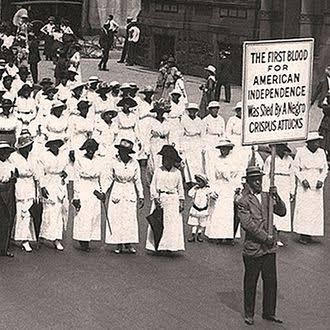
Participants marched to the beat of muffled drums. Women and children wore white to symbolize innocence, while men dressed in dark suits to signify mourning and dignity. Banners carried messages such as “Make America safe for democracy” and “Mother, do lynchers go to heaven?” A formal petition on lynching was later presented to the White House, urging President Woodrow Wilson to make lynching a federal crime.
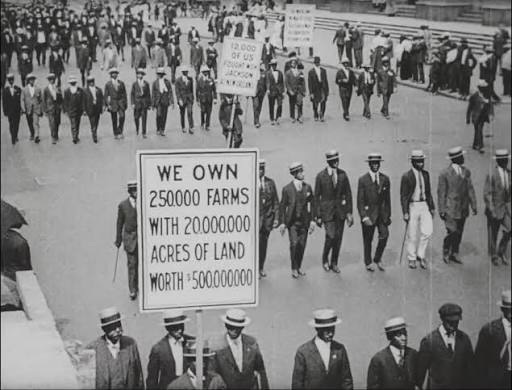
The power of the parade was its restraint. In a nation speaking loudly about democracy abroad, these marchers used silence to demand justice at home.
His influence also reached into the world of Pan-African thought. He was an associate of Marcus Garvey and was involved with the Universal Negro Improvement Association (UNIA), reflecting his commitment to global Black solidarity. At a time when ideas of racial unity and self-determination were gaining momentum, Dr. Martin stood at the crossroads of religion, scholarship, and activism.
When he died in March 1942, he left behind more than a congregation. He left a legacy rooted in faith, education, intellectual rigor, and organized resistance to injustice. From St. Kitts to Harlem, from the pulpit to the protest line, Rev. Dr. Charles Douglas Martin embodied a generation of Caribbean leaders who carried their islands’ resilience into the wider world.

