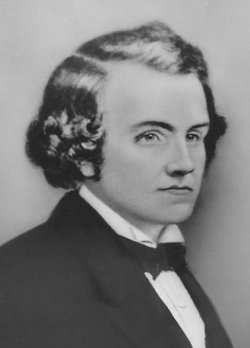

Born in Nevis, Dr. John Gorrie was a physician whose fight against yellow fever led to the early development of mechanical ice-making. Though unrecognized in his lifetime, his ideas helped lay the foundation for modern refrigeration and air conditioning.
His Early Life
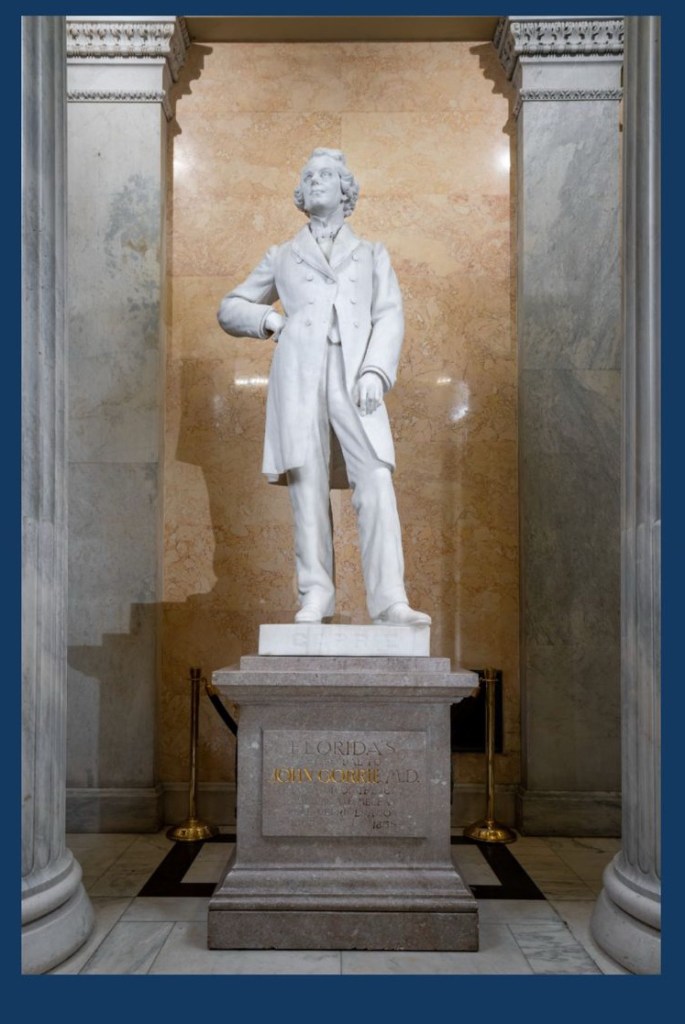
Most of us know Dr. John Gorrie as the father of refrigeration. But there is surprisingly little other information about him out in the public sphere. And some of what is thought to be known is contradictory. According to the book The Fever Man, Gorrie claimed to have been born to the mistress of a Spanish royal on the Isle of Nevis, in the Caribbean. But 1840 Franklin County Census records list Charleston, South Carolina as his birthplace in 1804, and that he was of Scotts-Irish descent. The Statuary Hall website in the United States Capitol lists his birth date as 1802, while his gravestone is etched with an 1803 birth date. He grew up in Columbia, South Carolina, and attended the College of Physicians and Surgeons of the Western District of the State of New York beginning in 1825. He completed a three-year curriculum in 2 years and his intellect was highly admired by his teachers. By 1828 he had returned to South Carolina and started a medical practice in Abbeville.
1833 was the year Dr. Gorrie arrived in Apalachicola. It’s unknown if this was by design, or if he’d just run out of river. He had traveled south by riverboat from Columbus, Georgia, down the Chattahoochee and Apalachicola rivers, stopping at towns along the way. In 1833 Apalachicola was an outpost of world commerce in the middle of an untamed wilderness. Cotton coming downriver, out to the northeast, and all of Europe. Finished goods came in from Europe and the Caribbean, then headed upriver to the interior. Ownership of the land the town was situated on was still in a dispute related to the Forbes Purchase and would not be decided by the Supreme Court for another two years. Apalachicola had antebellum gentility, coexisting with a dirty, bug-infested, rough and swampy waterfront.
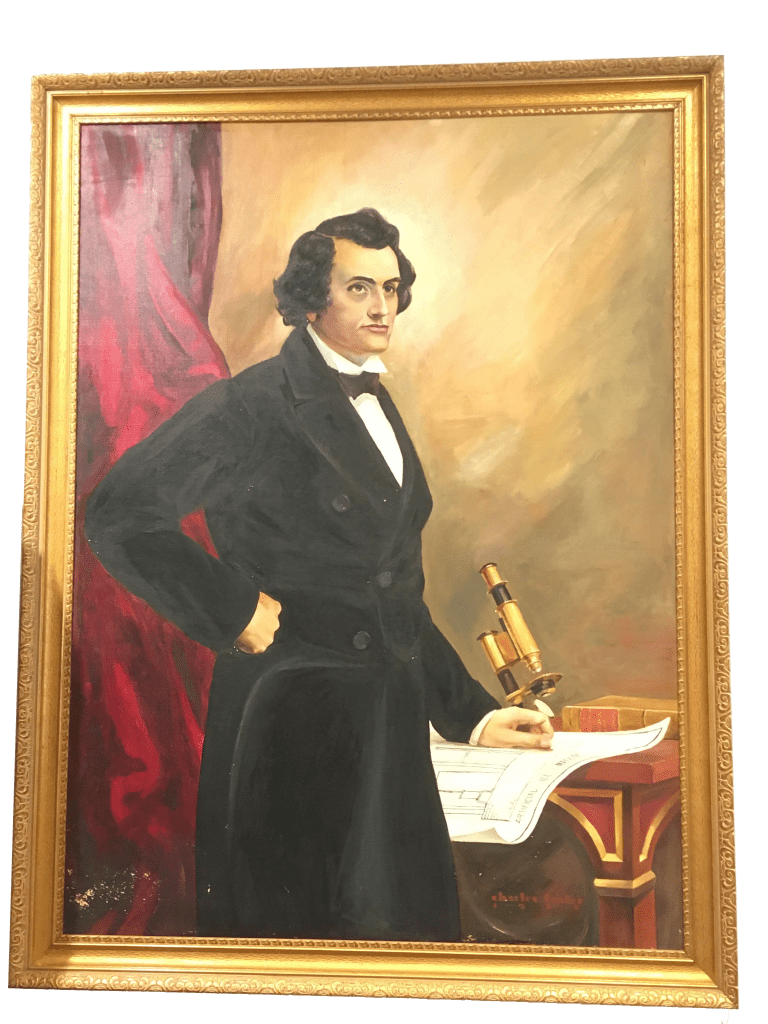
His work and Invention
Gorrie’s medical research focused on tropical diseases, especially yellow fever, at a time when the dominant medical belief held that illness was caused by “bad air,” or mal-aria. Working within this framework, he advocated for draining swamps and cooling sickrooms to improve patient outcomes. To do this, he devised a system that cooled rooms using ice placed in a basin suspended from the ceiling. Because cool air is heavier, it flowed downward over the patient and exited through an opening near the floor, creating a steady circulation of cooler air.
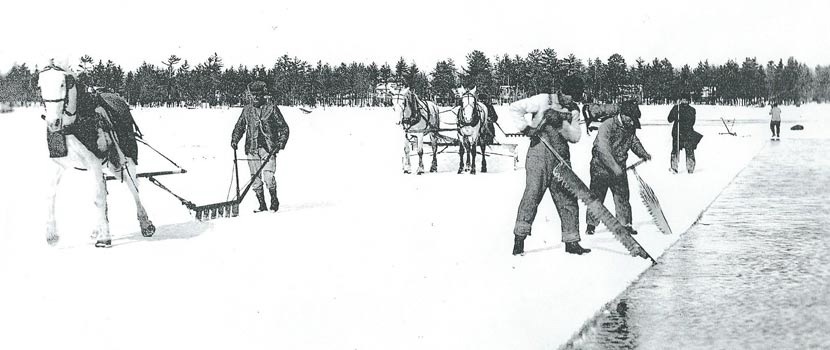
In early winter, ice blocks were cut from frozen lakes and rivers. The blocks usually had a thickness of 16-18 inches and were 22 inches square. Each block weighed about 250-300 pounds.
Transporting ice by boat from northern lakes was costly and unreliable, so Gorrie began experimenting with ways to make ice artificially. In 1844, he successfully produced ice mechanically. After 1845, he abandoned his medical practice entirely to focus on refrigeration technology.
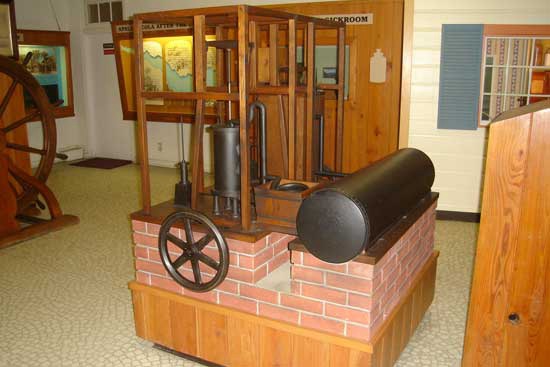
By 1850, he was routinely producing ice the size of bricks, and on May 6, 1851, he was granted Patent No. 8080 for a machine designed to make ice. The original model of this machine, along with the scientific articles he authored, are preserved at the Smithsonian Institution.
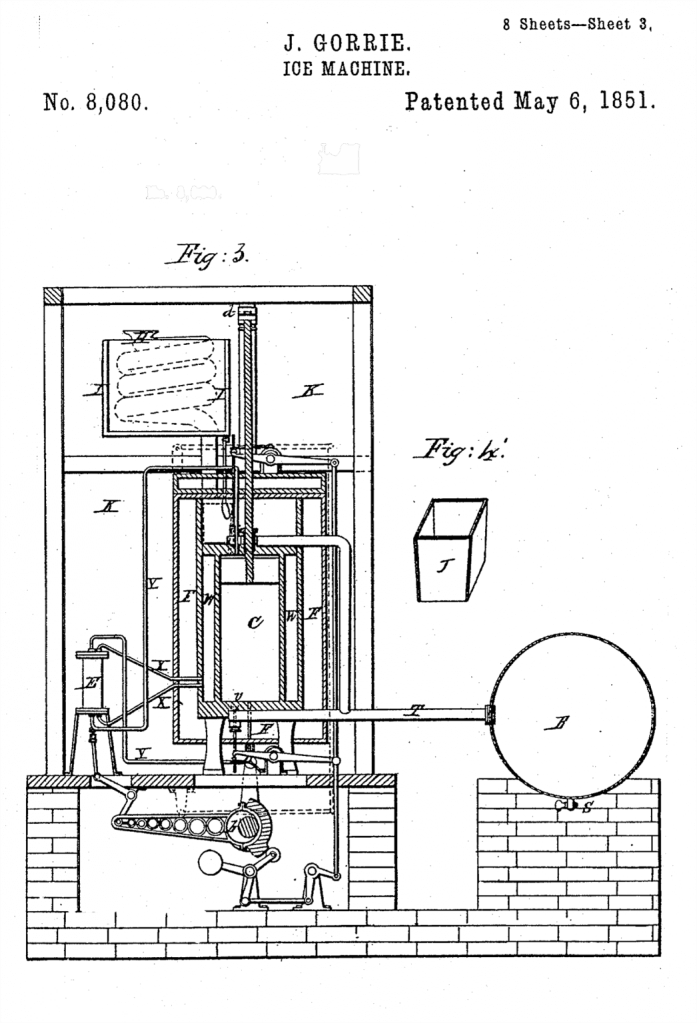
Schematics for Dr. John Gorrie’s ice machine
Gorrie’s work did not emerge in isolation. In 1835, patents for “Apparatus and means for producing ice and in cooling fluids” had already been granted in England and Scotland to American-born inventor Jacob Perkins, later known as “the father of the refrigerator.” Still, Gorrie struggled to turn his invention into a commercial success. Impoverished and attempting to raise funds to manufacture his machine, he saw his efforts collapse when his partner died. Public criticism followed, and the combination of financial ruin, humiliation, and declining health took its toll. Gorrie died in seclusion on June 29, 1855, and is buried in Magnolia Cemetery.
Decades later, a version of Gorrie’s cooling concept resurfaced during the final days of President James A. Garfield in 1881. Naval engineers constructed a box filled with cloths soaked in melted ice water; as hot air passed over the cloths, the room temperature dropped by 20 degrees Fahrenheit. Like Gorrie’s original system, this method required enormous quantities of ice to maintain cooling, making it impractical for continuous use. Even so, the experiment marked a significant moment in the history of air conditioning. It demonstrated that Gorrie’s underlying idea was sound, even if he had been unable to capitalize on it during his lifetime.
The evolution of refrigeration continued shortly thereafter. The first practical refrigeration system, patented in 1855, was built by James Harrison in Geelong, Australia, cementing the transition from experimental cooling methods to reliable, industrial technology.

Family Life
In May of 1838, the good doctor married Caroline (Myrick) Beman, the new owner of the Florida Hotel in Apalachicola. She was a widow from Georgia, but she had Myrick family relatives in Apalachicola and her father had large agricultural landholdings inland. The Florida Hotel stood approximately where the Fort Coombs Armory building sits today. Together, the Gorries had two children, a son, also named John, and a daughter, Sarah. John, Jr. later fought for the Confederacy in the Civil War and then served as a state senator from Marianna from 1865-66. He died in a carriage accident on his way to Tallahassee for a legislative session.
🌺🌸Buy me a Coffee ☕️ please🌺🌸